

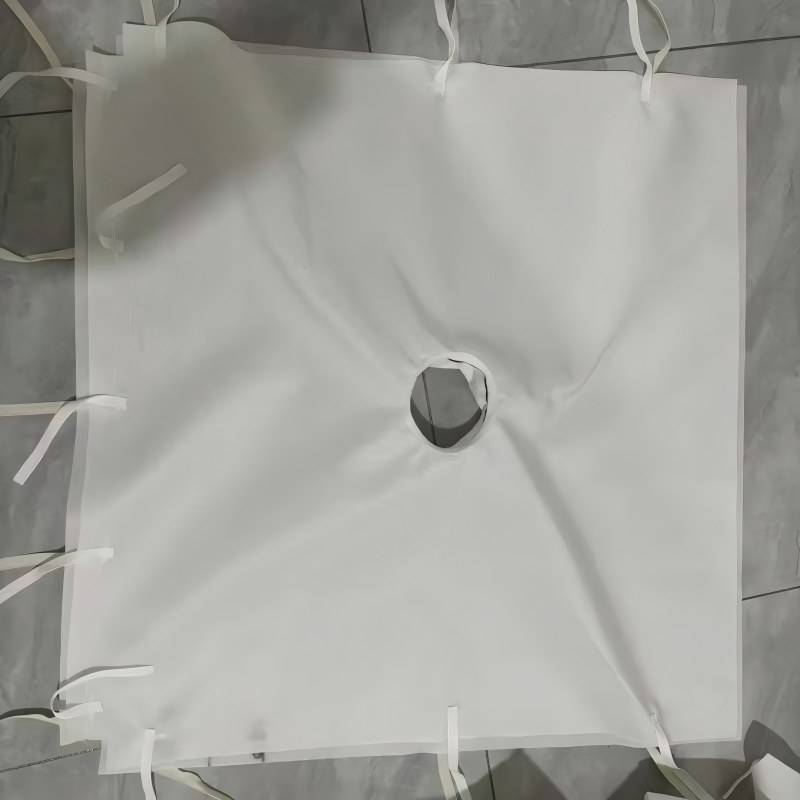
Filter cloth is the filtration media fitted to filter plates, designed to separate solids from liquids in slurry.
The pore size determines how fine a particle it can capture, while the material defines its temperature resistance and chemical compatibility.
Simply put, filter cloth is the “lungs” of your filter press.

1. Match the Right Material to Your Application
Material | Temperature Resistance (°C) | pH Range | Advantages | Disadvantages |
Polypropylene (PP) | ≤90 | 0–14 | Excellent acid and alkali resistance, economical and practical | Susceptible to oxidizing agents |
Polyester (PET) | ≤140 | 1–8 | High temperature resistance, high strength, anti-oxidation properties | Poor resistance to strong alkalis |
Nylon (PA) | ≤105 | 2–6 | Excellent wear resistance, suitable for coarse particle applications | Poor resistance to strong acids, high moisture absorption |
Use the guide below to pick the best material for your industry:
PP (Polypropylene)
Ideal for chemical applications — excellent corrosion resistance.
PET (Polyester)
Best for high-temperature processes.
Nylon
Perfect for high-wear environments like mining — highly durable.
2. Yarn & Weave Structure Directly Affect Filtration Performance
Filter cloth performance depends on more than just material — yarn type and weave also play a critical role.
Yarn Types
Monofilament
Smooth surface, easy cake release, low clogging.
Multifilament
High density, great for capturing fine particles.
Staple / Spun
Superior sealing for leak-tight filtration, but harder to release cake.
3.Weave Types & Selection Tips
Weave Type | Features | Application Requirements |
Plain | Tight weave, fine filtration, prone to clogging | High filtration precision requirements |
Satin | Smooth surface, good cake release, low clogging tendency | Rapid dewatering, easy cleaning requirements |
Twill | Diagonal structure, wear-resistant, balances flow rate and filtration precision | Minerals, coarse particles, high-pressure working conditions |
For finer filtration: choose multifilament + plain weave
For faster dewatering: choose monofilament + satin weave
For maximum durability & wear resistance: choose twill weave + nylon
Want to know more? Contact us to get the answers you need.
Ms Yanice Yu
Qingdao Star Machine Technology Co.,Ltd.
Whatsapp/ Wechat ID: +8617852092959
Email:Yanice@starmachinechina.com
Copyright © 2025 Qingdao Star Machine Technology Co., Ltd. All Rights Reserved. Powered by HiCheng

