

Baghouse dust collectors stand as the most extensively used category among all dust collection equipment variants. In terms of quantity, their application accounts for more than 60% of the total dust collectors; in terms of gas treatment capacity, this figure rises to over 70%. The widespread adoption of baghouse dust collectors stems from their high dust removal efficiency, which meets the stringent environmental requirements for ultra-low emissions and special emissions. They feature stable operation and strong adaptability, with a gas treatment capacity ranging from several hundred cubic meters to millions of cubic meters per hour, making them ideal purification equipment for dust control projects across a wide range of industrial and mining enterprises.
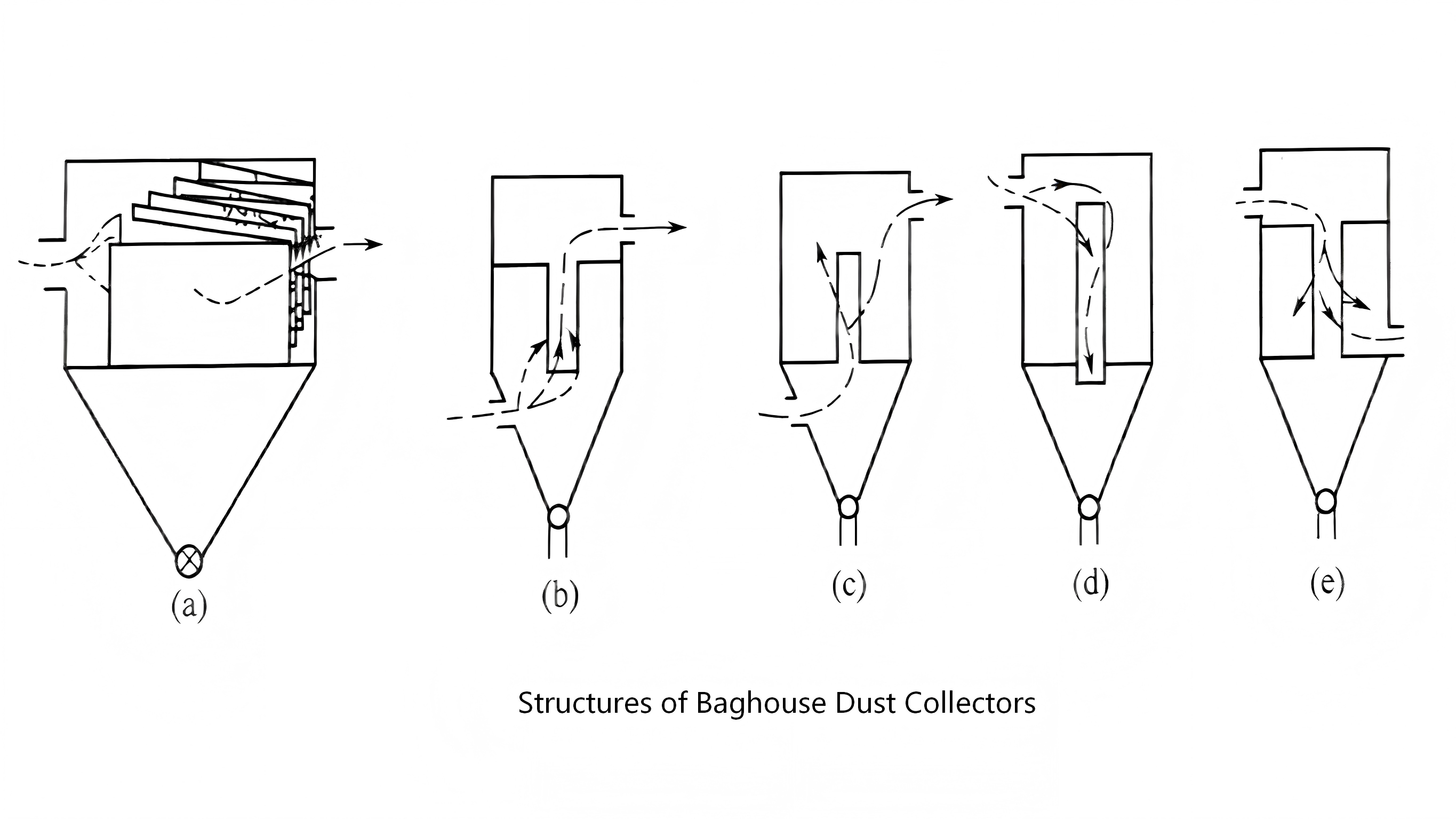
The filter fabrics used in baghouse dust collectors are made from three major types of raw materials: natural fibers, synthetic fibers, and inorganic fibers. Classified by processing method, filter fabrics fall into woven fabrics, non-woven fabrics, and composite fabrics. Commonly used options in dust control projects include needle-punched felts, "729" filter fabrics, glass fiber filter fabrics, as well as membrane-coated versions of these fabrics.
"208" polyester fleece fabric is manufactured from polyester yarns. After being woven into filter fabric, it undergoes a napping process to form a dense layer of fleece on the surface, which enhances the fabric's filtration, wear resistance and air permeability. This type of fleece fabric was formerly widely used in small-sized baghouse dust collectors but is now less commonly adopted.
Needle-punched felt is produced via the non-woven needle-punching method. Fibers arranged in a crisscross 3D pattern are needle-punched into a felt, then undergo a series of processes including heat setting and calendering to form a three-dimensional structure with a smooth and flat surface.Needle-punched felt boasts the following characteristics: high porosity and excellent air permeability that reduce pressure loss and energy consumption; high purification efficiency; a long service life; as well as superior wear resistance, corrosion resistance and strong chemical stability. It is often used in conjunction with pulse jet baghouse dust collectors.
The structural design of "729" filter fabric endows it with properties such as a smooth and soft texture, high strength, low elongation, low operating pressure loss, excellent cleaning performance and a long service life. After being treated with heat setting and other processes, it is widely applied in industrial dust collection and flue gas treatment.The "729" series polyester filter media is suitable for low-energy cleaning baghouse dust collectors. It can operate continuously in working environments with temperatures below 120°C and above the flue gas dew point temperature, and can withstand temperatures of up to 130°C for short periods. For filtering flue gas with high moisture content or a small amount of oil contamination, the water-repellent and oil-repellent 728-E filter media is the optimal choice. "729" filter fabric is mostly matched with large-scale reverse air baghouse dust collectors.
Want to know more? Contact us to get the answers you need.
Ms Yanice Yu
Qingdao Star Machine Technology Co.,Ltd.
Whatsapp/ Wechat ID: +8617852092959
Email:Yanice@starmachinechina.com
Copyright © 2025 Qingdao Star Machine Technology Co., Ltd. All Rights Reserved. Powered by HiCheng

