

In the pulse‑jet cleaning system of bag‑type dust collectors, pulse valves act as the pneumatic switch that directly determines jet strength, cleaning effect and overall equipment stability. While right‑angle pulse valves are widely used, the DMF‑Y immersion solenoid pulse valve, featuring low flow resistance and large jet volume and stable performance under low‑pressure working conditions, has become a preferred core component for reconstruction and new‑build projects of large‑size baghouse dust collectors.

With immersion mounting design, the DMF‑Y series pulse valve is fitted directly inside the air tank cavity without external inlet pipelines. Compressed air flows into the valve body straight from the air tank, eliminating airflow loss caused by connecting pipes. Compared with right‑angle pulse valves of the same specification, it greatly reduces airflow resistance. It provides larger jet air volume under identical air‑source pressure and generates valid pulse airflow even when inlet pressure is insufficient. It works within a wide operating pressure range of 0.1‑0.7 MPa. Many field applications allow lower system air‑supply pressure to cut down energy consumption of air compressors for energy‑saving operation.
The valve body is made of die‑cast aluminum alloy with anti‑corrosion surface treatment, suitable for harsh industrial sites with heavy dust and high humidity such as cement plants, metallurgical facilities, chemical workshops and waste‑to‑energy plants. Composed of electromagnetic pilot head, double‑layer diaphragm assembly and return spring, the valve opens and closes by separating front and rear air chambers via the diaphragm. Upon receiving electrical signals from the pulse controller, the pilot head releases pressure quickly, the diaphragm opens instantly to discharge compressed air for filter bag jet cleaning. Once the electrical signal disappears, the diaphragm resets rapidly to finish one working cycle. It features fast response and supports long‑time continuous high‑frequency jetting.
As the key wearing part of DMF‑Y pulse valves, fabric‑reinforced NBR nitrile rubber diaphragms are standard configuration with excellent fatigue resistance against repeated impacts, achieving millions‑of‑cycle service life for qualified products. For high‑temperature and corrosive working conditions, FKM fluororubber diaphragms are available as upgrades to expand applicable temperature limits. Coils are offered in multiple voltage options including DC24V and AC220V with IP65 protection grade against dust splash and lower risk of coil burnout. Adopting modular construction, the valve allows separate replacement of coils and diaphragm repair kits instead of full‑valve replacement to reduce spare‑part costs in daily maintenance.
Despite outstanding performance, DMF‑Y pulse valves still encounter on‑site troubles such as weak cleaning force, air leakage, failing to close and no jet trigger. Plenty of field cases indicate most malfunctions are not caused by inherent quality defects, but result from improper system matching and insufficient routine maintenance. Impurities from rusted air tanks may enter the valve and block diaphragm orifices. Untreated compressed air with water and oil accelerates diaphragm aging. Improper pulse width setting on the pulse controller leads to overheating and burnout of coils. Mismatched air‑tank cut‑out dimensions and poor sealing during installation also trigger air leakage.
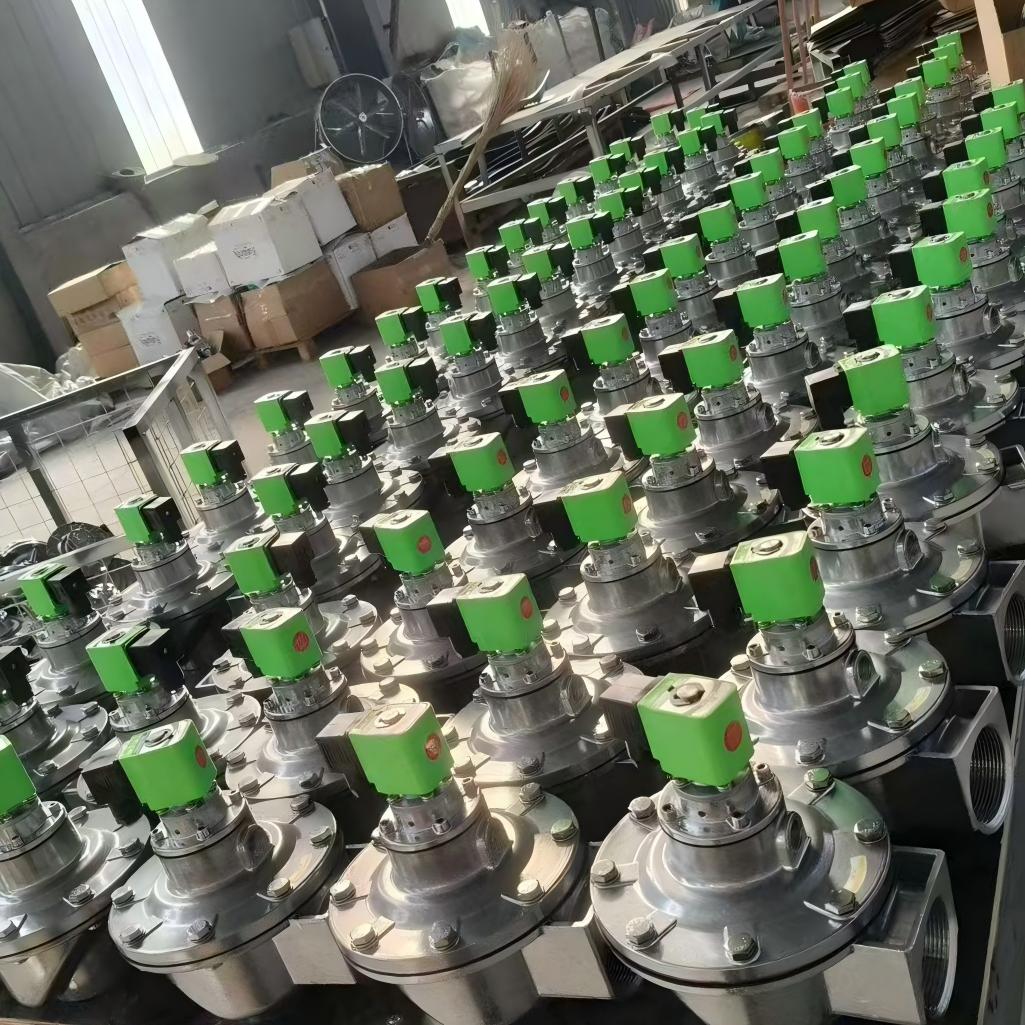
Practical recommendations for field application of DMF‑Y immersion pulse valves are listed below. First, install oil‑water separators upstream of the air source to guarantee dry and clean compressed air supplied to the air tank. Second, fully purge welding slag and rust residues inside air tanks before commissioning to prevent particle scratches on diaphragms. Third, strictly follow dimension requirements for air‑tank flange cut‑outs and keep gaskets intact for reliable sealing. Fourth, carry out regular inspection, listen for abnormal sound and persistent air leakage. Stop equipment timely to check diaphragms and pilot heads and apply standard repair kits instead of non‑standard accessories. Fifth, set appropriate jet interval and pulse width on the pulse controller to avoid long‑term coil electrification.
With increasingly strict industrial environmental regulations in modern industry, large‑scale dust‑removal systems put forward higher requirements on cleaning efficiency, energy‑saving performance and long‑term reliability. Thanks to low flow resistance, powerful jet output and adaptability to low‑pressure air sources together with replaceable spare parts, DMF‑Y immersion pulse valves gain growing market share in large baghouse dust‑removal projects. Proper type‑selection, standardized installation and periodic maintenance are essential to bring its performance into full play, stabilize differential pressure of dust collectors, protect filter bags, minimize shutdown frequency and help enterprises achieve both environmental compliance and cost‑saving benefits.
Contact:Yanice Yu
Whatsapp/ Wechat ID: +8617852092959
Email: Yanice@starmachinechina.com
Copyright © 2025 Qingdao Star Machine Technology Co., Ltd. All Rights Reserved. Powered by HiCheng

