

As the pressure stabilizing and energy storage component of baghouse pulse jet systems, the proper selection of air tanks determines the stability of pulse jet force and directly affects dust cleaning performance and filter bag service life. Many dust collector manufacturers and engineering contractors focus only on pulse valves and filter bags during design, ignoring air tank parameters. Improper selection often leads to unstable pressure, weak jetting and air tank corrosion. This article introduces air tank selection rules from volume calculation, material options, port layout and drain structure. We provide custom air tanks with anti-corrosion treatment and air tightness test, compatible with mainstream pulse valves.
In the design of baghouse dust collectors, pulse valves and filter bags usually attract most attention. The air tank, regarded as the pressure buffer station of pulse cleaning system, is often underestimated. Many on-site failures including poor dust cleaning, fluctuating differential pressure and frequent pulse valve diaphragm damage are caused by wrong air tank selection. An air tank is more than a simple compressed air container. Its volume, material, port arrangement, anti-corrosion and drain structure must match your pulse jet system and working conditions.
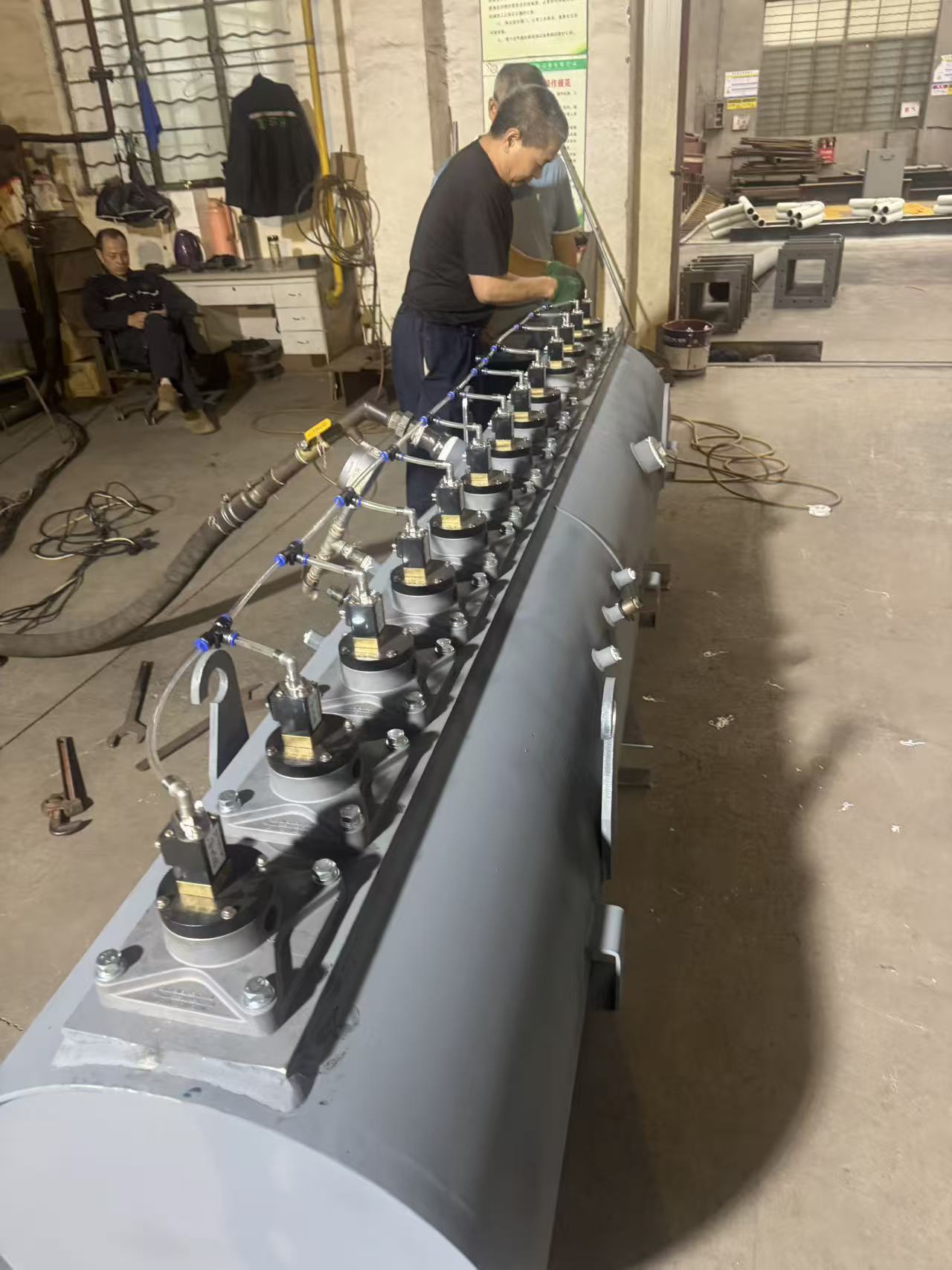
Volume is the primary parameter for air tank selection. The core rule is to limit pressure drop when multiple pulse valves trigger instant jetting. The required tank volume is calculated based on the number of pulse valves and air consumption per shot. If the volume is too small, internal pressure drops sharply during sequential jetting. Insufficient jet power results in incomplete dust cleaning and filter bag caking. Excessively large volume prolongs air charging time and increases air compressor energy consumption. Our design reserves 15%~20% extra volume margin according to your pulse valve configuration, to maintain stable pressure for each pulse shot. Custom air tank volume is available upon your drawings.
Carbon Steel Air Tank: Suitable for normal-temperature dry compressed air, widely used in cement, mining, grain and general dust removal projects. With sandblasting and internal anti-corrosion coating, carbon steel tanks deliver good rust resistance for standard environments. However, under humid or corrosive air conditions, internal rust will form particles, scratch pulse valve diaphragms and shorten component service life.
Stainless Steel Air Tank (304 / 316L): Ideal for chemical, waste incineration and high-humidity corrosive applications. Stainless steel resists moisture corrosion and generates minimal rust debris. It keeps clean compressed air to protect pulse valves and filter assemblies, cutting maintenance frequency for high-standard environmental projects.
Reasonable port distribution ensures uniform pressure to each pulse valve and avoids uneven jetting force caused by inconsistent pipe length. The air inlet is carefully positioned to reduce air turbulence. The drain structure cannot be omitted. Compressed air inevitably produces condensate water. Without drain ports at the tank bottom, accumulated water causes internal corrosion and flows into pulse valves to erode diaphragms. Our air tanks reserve mounting positions for manual or automatic drain valves to discharge condensate regularly.
Insufficient volume: Severe pressure drop, weak pulse jetting, high system differential pressure and filter bag caking
Unsuitable material: Rust inside the tank contaminates air and damages pulse valve diaphragms
Poor port arrangement: Uneven jet performance across different filter compartments
Missing drain outlet: Water buildup accelerates tank corrosion and pulse valve failure
We manufacture custom dust collector air tanks according to drawings from dust collector OEMs and EPC contractors. Every air tank undergoes strict pressure and air tightness testing before delivery. Internal anti-corrosion coating is optional. Port positions can be processed to fit your selected pulse valves. Our air tanks integrate seamlessly into pulse jet systems, lowering engineering design workload and reducing potential operational failures.

Air tank selection is critical for pressure balance of pulse cleaning systems. Dust collector manufacturers and procurement teams should evaluate air tank volume, material and structure at the early design stage. A properly matched air tank stabilizes pulse jet performance, extends the service life of filter bags and pulse valves, and cuts the overall operating and maintenance cost of baghouse dust collectors.
Contact:Yanice Yu
Whatsapp/ Wechat ID: +8617852092959
Email: Yanice@starmachinechina.com
Copyright © 2025 Qingdao Star Machine Technology Co., Ltd. All Rights Reserved. Powered by HiCheng

